




E-bike battery fires are rare, but when they happen they are severe, and the reporting rarely separates the two very different products involved. Almost all of the incidents that make the news involve non-compliant batteries, mismatched chargers or DIY conversions — not e-bikes bought from a reputable UK seller. Here is what actually causes the problem, what the law now expects of the people selling you a battery, and the handful of habits that remove most of the risk.
What actually goes wrong
A lithium-ion cell stores a lot of energy in a small space. If a cell is damaged, badly made, overcharged or allowed to get too hot, it can enter thermal runaway: one cell overheats, which heats its neighbours, which overheat in turn. The reaction feeds itself, produces its own oxygen, and cannot be smothered the way an ordinary fire can. It is fast, extremely hot, and the smoke is toxic.
The point worth holding onto is that thermal runaway is almost always the end of a chain that started somewhere avoidable — a cheap charger, a battery assembled from salvaged cells, or a pack that took a hard knock months earlier.
The three things that cause most incidents
- The wrong charger. Universal or replacement chargers bought online are the single most common factor. A charger that delivers the wrong voltage or does not stop at the right point will damage a pack whether or not anything happens immediately.
- Conversion kits and unbranded packs. Batteries assembled outside a proper production process — often from second-life cells — frequently have no meaningful battery management system.
- Physical damage. A pack that has been dropped, crushed, submerged or punctured can fail weeks later with no warning. Damage does not have to be visible from the outside.
What the law now expects of sellers
In December 2024 the Office for Product Safety and Standards published statutory guidelines on lithium-ion battery safety for e-bikes, made under the General Product Safety Regulations 2005. They apply to anyone producing, importing or distributing e-bike batteries in Great Britain, and they are strongly recommended for Northern Ireland.
In substance, they require sellers to:
- Fit a battery management system capable of preventing thermal runaway in normal use and in foreseeable misuse
- Protect against over-voltage, over-current and unsafe temperatures
- Carry out safety assessments and monitor products in the field
- Give buyers adequate information about safe charging, storage and use
Non-compliance can lead to recalls, withdrawal from the market, prosecution and — for serious breaches — criminal sanctions. Separately, a Lithium-ion Battery Safety Bill was in its final parliamentary stages in spring 2026, aimed at putting a firmer statutory regime around the same territory.
The relevant product standard for the complete bike is BS EN 15194, which covers electrical safety and the battery system alongside the mechanical requirements. A seller who cannot tell you whether their bikes are built to it is telling you something.
What to check before you buy
| Look for | Why it matters |
|---|---|
| BS EN 15194 conformity for the bike | The standard that covers the electrical and battery system, not just the frame |
| A named cell manufacturer | Established cell makers have consistent quality control; anonymous cells do not |
| A charger supplied with the bike, matched to the pack | Removes the most common cause of damage from day one |
| A UK address for the seller and a stated warranty | Someone to hold responsible, and someone to service the bike |
| Availability of a genuine replacement battery | A pack you cannot replace properly in four years is a pack you will be tempted to replace badly |
Charging and storage: the rules worth keeping
London Fire Brigade's guidance is the clearest available, and it comes down to a short list:
- Use the charger that came with the bike. If you need a replacement, buy it from the manufacturer.
- Don't charge while you're asleep or out of the house. Charge when you are awake and can respond.
- Don't charge in a hallway, by a door, or anywhere on your escape route. If a pack does fail, you need the exit clear.
- Charge on a hard, non-flammable surface with space around the pack — not on a bed, sofa or carpet, and not covered.
- Unplug when it's charged. Leaving a pack on the charger for days is unnecessary and shortens its life.
- Let it cool first. After a hard ride, give the battery half an hour before plugging it in.
- Store between roughly 10 °C and 20 °C, at around half charge if the bike is going away for the winter. Freezing sheds and hot conservatories are both bad.
Signs a battery should be retired
Stop using and stop charging a pack that shows any of these, and speak to the manufacturer:
- Any swelling, bulging or a case that no longer sits flush
- Heat that is more than mildly warm during or after charging
- A hissing or popping sound, or any smell
- Leaking fluid or visible corrosion at the terminals
- A sudden, dramatic drop in range with no other explanation
Never open a pack, never attempt a cell replacement at home, and never have a battery "rebuilt" by anyone other than the manufacturer or an authorised repairer.
Disposal
A used e-bike battery must never go in a household bin or a kerbside recycling box. Crushed in a refuse lorry, it is a fire in a confined space — this is a genuine and growing cause of waste-vehicle fires in the UK. Take it to a household waste recycling centre that accepts lithium batteries, or back to the retailer. Most UK bike shops that sell e-bikes will take one.
Quick answers
Are e-bike batteries dangerous? A compliant battery from a reputable seller, charged with its own charger, is low risk. The great majority of reported fires involve non-compliant packs, incorrect chargers or conversion kits.
Can I leave my e-bike charging overnight? It's advised not to. Charge while you're awake and in the property, and unplug when the pack is full.
How long does an e-bike battery last? Typically several hundred full charge cycles before capacity noticeably drops — for most commuters, several years. Heat, deep discharges and being stored at full charge all shorten it.
Can I use a different charger? Only a genuine replacement from the manufacturer for that pack. Universal chargers are the most common cause of avoidable damage.
Where do I take an old e-bike battery? A household waste recycling centre that accepts lithium batteries, or the retailer you bought the bike from. Never the household bin.
How we handle it
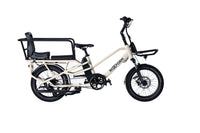
Every Roxform is sold with its own matched charger, and every bike we bring into the UK is built to BS EN 15194 with a battery management system that handles over-voltage, over-current and temperature protection. Replacement batteries are available for the models we sell, because the alternative — riders sourcing a pack from an online marketplace in a few years' time — is exactly the situation the OPSS guidelines exist to prevent.
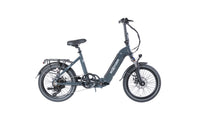
If you have a question about a battery on a bike you already own, whether or not it's one of ours, email us. And if you're still choosing, our full range is here, including the folding Plico for anyone who has to bring the bike indoors.


