




Someone will eventually tell you that an e-bike does not count. It is usually said kindly, and it is usually wrong. The research on e-bike exercise benefits is now reasonably consistent: electrically assisted cycling sits in the moderate-intensity band, it is easier than riding the same route unassisted, and for most people it is harder work than walking. Below is what the studies actually measured, and where the assistance genuinely does take something away.
What "cheating" would have to mean
A UK-legal electric bike is an EAPC. The rules are narrow: the motor is rated at no more than 250 watts continuous power, it must not propel the bike above 15.5 mph, the bike must have pedals that can be used to propel it, and the rider must be 14 or over. No licence, tax, insurance or registration is required.
That design matters for the fitness question. Assistance is proportional to your pedalling and it stops at 15.5 mph. Above that speed, or when you stop turning the pedals, you are riding a fairly heavy bicycle under your own power. The motor tops your effort up; it does not take it over.
E-bike exercise benefits: what the numbers show
The most useful summary is a 2018 systematic review in the International Journal of Behavioral Nutrition and Physical Activity, which pooled the laboratory and field studies measuring what e-cycling does to the body. Riding at a self-selected pace, participants worked at an estimated 4.9 to 8.3 METs, with heart rates at 67 to 79 per cent of maximum and oxygen uptake at 51 to 74 per cent of maximum. The authors classify that as at least moderate intensity.
| Measure, self-selected pace | E-cycling | Conventional cycling |
|---|---|---|
| Estimated METs | 4.9 to 8.3 | 6.1 to 8.5 |
| Oxygen uptake (ml/min/kg) | 14.7 to 29 | 19.3 to 37 |
| Oxygen uptake, share of maximum | 51 to 74 per cent | 58 to 74 per cent |
| Heart rate, share of maximum | 67 to 79 per cent | Not pooled |
| Energy use | 4.9 to 6.5 kcal per minute | Not pooled |
| Estimated METs, uphill | 5.2 to 6.8 | 7.2 to 8.5 |
The same review found moderate evidence that e-cycling improves cardiorespiratory fitness in people who were previously inactive. In a four-week randomised pilot, peak oxygen uptake rose 10 per cent in the e-cycling group against 6 per cent for conventional cycling. A three-month study found a 7.7 per cent gain overall, rising to 9.6 per cent among the least fit participants and only 1.5 per cent among the fittest. That pattern is worth noting: the assistance helps the people with the most to gain, and does least for those already training hard.
Lower than an unassisted bike, and that is the trade
A 2022 meta-analysis in the Scandinavian Journal of Medicine and Science in Sports pooled 14 crossover studies covering 239 participants and put a number on the difference. With moderate assistance, heart rate was 11.4 beats per minute lower than on a conventional bike, and estimated METs were 0.83 lower. With high assistance the gap widened to 19.5 beats per minute. Oxygen uptake was significantly lower too.
So per mile, an e-bike is less work. Anyone who says otherwise is selling something. The honest case for e-bikes is not that the effort is identical; it is that the effort is still in the useful range, and that it is an effort people repeat.
Harder than walking, probably
The same meta-analysis compared e-cycling with walking and found heart rate about 10 beats per minute higher and oxygen uptake higher on the bike. Neither difference reached statistical significance, and each comparison rested on only two studies. The 2018 review reached the same cautious conclusion: e-cycling looks more demanding than walking, but the evidence base is thin and the clearest differences showed up on climbs.
Treat it as a reasonable working assumption rather than a settled fact. If you currently walk to work and would rather ride, you are not trading down.
Why riders often end up doing more, not less
This is where the argument turns. A survey of e-bike and bicycle users across seven European cities, published in Transportation Research Interdisciplinary Perspectives in 2019, found e-bike owners rode further: 8.4 km on an average bicycle trip against 4.8 km for conventional cyclists, and 8.0 km a day by bike against 5.3 km. Total physical activity came out broadly similar between the two groups, at roughly 4,460 against 4,090 MET-minutes a week.
The direction of the switch decides the outcome. People who moved to an e-bike from a car gained around 550 MET-minutes a week, and from public transport around 800. People who moved from a conventional bike lost around 200. If you already ride a normal bike every day, an e-bike will probably cost you a little activity. If you drive, it will not.
Context for British readers: the Department for Transport's National Travel Survey recorded an average of 15 cycling trips and 53 miles per person in 2024, with commuting making up 31 per cent of cycling trips. For most people the realistic comparison is not e-bike against racing bike. It is e-bike against not cycling at all.
Does it count towards the 150 minutes?
The UK Chief Medical Officers' guidelines ask adults aged 19 to 64 for at least 150 minutes of moderate intensity activity a week, or 75 minutes of vigorous activity, and list cycling as an example of moderate activity. The practical test they give is simple: at moderate intensity you can talk but not sing.
Measured against that, a half-hour assisted commute each way comfortably clears the weekly target. Two things it does not do. It is not vigorous activity for most riders, so you cannot count it at the 75-minute rate. And the guidelines also ask for muscle strengthening on at least two days a week, which no amount of cycling covers. You still need something else for that.
Getting more out of it, if that is the goal
- Ride in the lowest assistance level that still gets you there on time. The gap between moderate and high assistance in the meta-analysis was worth around eight beats per minute.
- Use the assistance to flatten the hill, not the whole route. Drop it back down afterwards rather than leaving it high.
- Let the range pay for distance instead of speed. A longer route at lower assistance is more activity for the same battery.
- Carry the load. Shopping, a child seat or a work bag all add resistance you do not have to think about.
- Watch the cut-off. Past 15.5 mph the motor stops helping, so a flat, fast stretch is entirely your own legs.
Quick answers
Do e-bikes count as exercise? Yes. Pooled studies put assisted riding at an estimated 4.9 to 8.3 METs with heart rates at 67 to 79 per cent of maximum, which the reviewers describe as at least moderate intensity.
Does it count towards the 150 minutes a week? Yes, as moderate intensity activity. It is not usually vigorous activity, and it does not cover the separate muscle-strengthening recommendation.
How much less work is it than a normal bike? About 11 beats per minute of heart rate and 0.83 METs at moderate assistance, rising to roughly 19 beats per minute at high assistance.
Will I get fitter if I am currently inactive? The evidence points that way. Peak oxygen uptake rose 7 to 10 per cent across several short intervention studies, with the largest gains in the least fit participants.
Is it still exercise if I use maximum assistance? Less of it, but not none. You are still pedalling a loaded bike, and above 15.5 mph the motor contributes nothing at all.
Where we would start
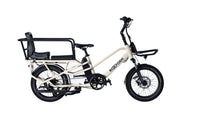
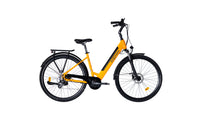
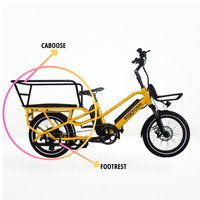
If the aim is regular, repeatable riding rather than training, a city bike is the sensible buy. The Roxform STRIDE S starts at £1,250 and is built for the five-to-ten-mile commute that most of this research describes. If you are replacing car journeys, which is where the activity gains in the survey data were largest, the PORTO L takes the shopping and the school run as well. The full range is on our electric bikes page.
Two companion pieces worth reading before you buy: what a 250W motor can actually climb, and how far an e-bike really goes.
Sources
- UK Chief Medical Officers' physical activity guidelines, GOV.UK
- Electric bikes: licensing, tax and insurance, GOV.UK
- National Travel Survey 2024: active travel, Department for Transport
- Health benefits of electrically-assisted cycling: a systematic review, International Journal of Behavioral Nutrition and Physical Activity, 2018
- Systematic review and meta-analysis evaluating the effects electric bikes have on physiological parameters, Scandinavian Journal of Medicine and Science in Sports, 2022
- Physical activity of electric bicycle users compared to conventional bicycle users and non-cyclists, Transportation Research Interdisciplinary Perspectives, 2019


