



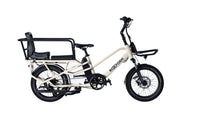
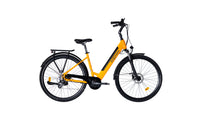
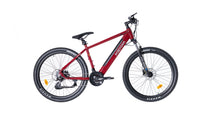
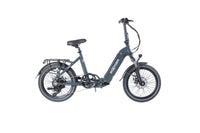

A new e-bike arrives mostly built, and that is the problem. It feels finished, so most people clip the pedals on, charge it and ride. A proper new e-bike setup takes about half an hour spread over the first few weeks, and it is the difference between a bike that still feels tight at 1,000 miles and one that develops creaks, rubs and slack by Christmas.
Here is what we tell customers to do, in order, over their first 100 miles.
New e-bike setup: the first ten minutes
Before the first ride, go round the bike once with your hands rather than your eyes. Nearly everything that goes wrong early is a fastener that settled in transit.
| Check | What you are looking for |
|---|---|
| Stem and handlebar bolts | No movement when you hold the front wheel between your knees and twist the bars |
| Wheel axles or quick-releases | Fully closed and tight; no side-to-side play at the rim |
| Brake levers | Firm bite well before the lever touches the grip, and no rubbing when the wheel spins |
| Tyre pressure | Within the range moulded into the tyre sidewall, set with a gauge rather than a thumb |
| Mudguards, rack, kickstand | Nothing loose, nothing touching a tyre |
| Battery | Locks positively into the frame and does not rattle |
| Manufacturer's plate or marking | Present and legible |
That last one matters legally as well as practically. Government guidance for electrically assisted pedal cycles says that if a bike has a plate it must be securely fitted somewhere clear and accessible, showing the manufacturer's name, the motor's maximum continuous rated output and the battery's nominal voltage; where there is no plate, the bike should be durably marked with the manufacturer, the continuous rated output and the maximum speed the motor will assist to. If you cannot find either on a bike you have just bought, ask the seller before you ride it.
Use a torque wrench if you own one and the manual gives figures. If you do not, the honest answer is that finger-tight plus a careful nip is safer than guessing hard - and a bike shop will do the whole check in ten minutes.
Fit, before habits set in
Saddle height first: with the pedal at its lowest point and your heel on it, your leg should be almost straight, which leaves a slight bend when you pedal normally with the ball of your foot. Most people ride a new bike too low because it feels safer, then accept knee ache as normal.
Then the brake levers. Rotate them on the bar until your wrist is straight when you reach them, and move them inboard or outboard so you brake with one or two fingers rather than a fist. On a heavier assisted bike you will use the brakes more than you expect, so reach adjustment is worth the five minutes.
Leave the handlebar angle and saddle fore-aft alone until you have ridden 20 or 30 miles. You cannot judge either from the kerb.
The first charge, and the habits worth forming now
Bikes normally arrive part-charged for shipping, so a full charge before the first proper ride is sensible. More important is what you do every time after that. The government's battery safety guidance for e-cycle users is specific, and all of it is easy to build into a routine from day one:
- Use only the charger supplied with the bike, or a replacement authorised by the manufacturer. Third-party chargers and battery packs may not be safe or compatible.
- Charge only while you are awake and in the building - not overnight, not while you are out.
- Do not charge where a fire would block your way out, and avoid escape routes and communal areas in shared buildings.
- Do not cover the battery or charger while charging, and do not overload sockets or coiled extension leads.
- Unplug once it is charged. If the battery is hot after a hard ride, let it cool first.
- Learn the warning signs: heat, bulging, hissing or cracking, an unusual smell, or charging that suddenly takes much longer. Stop using it and contact the retailer.
We have written about this at more length in our e-bike battery safety guide. Brakes must also be kept in efficient working order and, on an EAPC, meet paragraph 4.6.8 of BS EN ISO 4210-2:2014 or an equivalent European standard - which is a formal way of saying do not ride on brakes you have not checked.
What actually changes in the first 100 miles
Three things bed in, and all three are normal rather than faults.
Brakes
New disc pads and rotors need heat and pressure to transfer a thin, even layer of pad material onto the disc. Until that happens the brakes feel wooden and may squeal. A series of firm, controlled stops from a moderate speed on a quiet road, with a short roll between each to let the heat out, sorts most of it.
Cables and spokes
Gear cables stretch and wheels settle, so shifting that was crisp on day one can go vague by the second week. This is the single most common reason a new bike feels worse at 100 miles than at 10, and it is a five-minute adjustment, not a problem.
The chain and drivetrain
Factory assembly grease is for storage, not for riding. Clean it off and apply a proper lubricant suited to the weather you actually ride in, then keep on top of it. An assisted drivetrain carries more load than an unassisted one, so chains wear faster.
The legal basics that apply from your first ride
Nothing here is onerous, but it is worth knowing on day one rather than finding out later. An EAPC in Great Britain must have working pedals, a motor of no more than 250 watts continuous rated power, and assistance that stops propelling the bike above 15.5 mph. The rider must be 14 or over. No licence, tax, registration or insurance is required, and you may ride anywhere a pedal cycle is allowed - but not on the pavement.
After dark you must have a white front light and a red rear light lit, plus a red rear reflector and amber reflectors on the front and rear faces of each pedal. Flashing lights are permitted, though a steady front lamp is advised where there is no street lighting. A helmet is not a legal requirement in the UK; the Highway Code says you should wear one that conforms to current regulations, is the right size and is securely fastened, and we would rather you did - a well-fitting helmet costs less than a single physio appointment.
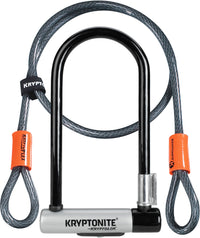
One more day-one job that is not legal but is practical: photograph the bike, note the frame number somewhere other than on your phone, and get a lock bought before you need it rather than after. Our guide to lock ratings explains why the Sold Secure Diamond-rated locks are the ones insurers take seriously.
At around 100 miles
Book, or do, a first check-over: re-torque the stem, bars and rack, re-index the gears, check spoke tension and brake pad wear, and re-check tyre pressures, which will have dropped. That one appointment is what keeps the next thousand miles quiet. From there, our servicing schedule sets out what needs doing and when.
Quick answers
Do I need to fully charge and discharge a new battery to calibrate it?
No. Modern lithium-ion packs do not need conditioning cycles. Charge it fully before a long ride and otherwise follow the manufacturer's instructions.
Can I leave it charging overnight?
Government guidance says no - charge only while you are awake and alert, and unplug when it is done.
Is squealing on a new bike a fault?
Usually not. New pads and rotors often squeal until they have bedded in. Squealing that persists after 100 miles, or a lever that pulls closer to the bar each week, is worth a look.
How often should I check tyre pressures?
Roughly every two weeks. Tyres lose pressure steadily whether you ride or not, and low pressure is the main cause of punctures and sluggish handling.
Do I need insurance?
Not legally for an EAPC. Many riders add cover through home contents or a specialist policy, which is a separate decision from the law.
Where to start
If you are still choosing, the setup burden is roughly the same across the range, so pick on use rather than on how much maintenance you fancy. The Stride S is the straightforward city option, and the full line-up sits in our electric bikes collection. If you have already bought one and want a second pair of eyes on the first check, our Hove team will talk you through it.


