




If you are weighing an e-bike against a car, a bus pass or a rail season ticket, the cost to charge an e-bike is the figure people guess at, and almost always guess too high. It is small enough that it rarely changes a buying decision, but it is worth knowing properly. Below is the arithmetic, using the electricity price actually in force in Great Britain this quarter and the battery capacities listed on our own bikes.
What you are actually paying for
From 1 October to 31 December 2026, Ofgem's price cap sets the average electricity unit rate at 26.32p per kWh for households in England, Scotland and Wales paying by Direct Debit, with a daily standing charge of 54.83p.
Only the unit rate matters for a bike. The standing charge is paid whether or not you plug anything in, so it is not part of the cost of charging. The sum you want is simply the size of the battery in kilowatt hours, multiplied by the unit rate.
One other thing has changed this winter. VAT on domestic electricity in Great Britain was cut from the 5% reduced rate to a zero rate on 1 October 2026, and is set to stay there until 31 March 2027. Northern Ireland remains on 5%. The cap figure above already reflects the zero rate.
What one full charge of a Roxform costs
Battery capacity is the only specification that matters here. These are the capacities and manufacturer range figures published on our product pages.
| Model | Battery | Energy | Cost of a full charge | Quoted range | Cost per mile |
|---|---|---|---|---|---|
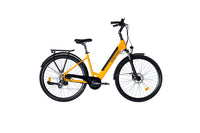
| Stride S | 36V 12.8Ah | 0.46 kWh | about 12p | up to 40 miles | about 0.3p |
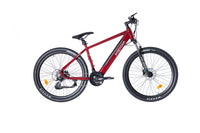
| Plico | 468Wh | 0.47 kWh | about 12p | 40 to 60 miles | 0.2p to 0.3p |
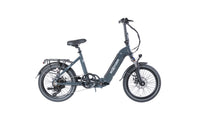
| Porto S | 36V 13Ah (468Wh) | 0.47 kWh | about 12p | up to 30 miles | about 0.4p |
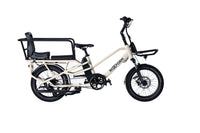
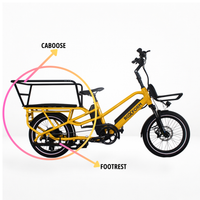
| Porto L | 936Wh (dual) | 0.94 kWh | about 25p | up to 62 miles | about 0.4p |
Two honest caveats. These costs are based on the energy the battery stores, and a charger always draws a little more from the socket than the cells end up holding, so treat the numbers as a floor rather than a precise reading. And the range figures are manufacturer quotes in favourable conditions, which means the cost per mile is a best case too.
What that comes to over a year
Take a reasonably hard-working commute: ten miles each way, five days a week, forty-six weeks a year. That is 4,600 miles. At the cost-per-mile figures above, the electricity for that year comes to somewhere between roughly £14 and £19.
Put another way, you could charge a Stride S from empty every single day for a year, 365 charges, and spend about £44 doing it. Nobody rides that way, but it is a useful ceiling: the electricity is not the expensive part of owning an e-bike, and no change of tariff or charging habit will make it so.
If you want the fuller picture against a car, including tax, insurance, servicing and parking, we worked that through separately in eBike vs car: the real cost of commuting in the UK.
Why your own figure will be different
- Your tariff. The cap is an average. If you are on a fixed deal, a time-of-use tariff or an EV tariff with cheap overnight rates, your unit rate may be well below 26.32p.
- Your region. Cap rates vary by distribution area, so the national average will not match your bill exactly.
- How much assistance you use. Riding in the highest assist level on every journey can easily double your energy use per mile compared with a light setting.
- Hills, load and cold. A loaded cargo bike on a Sussex hill in February uses far more than a flat summer commute. Lithium-ion batteries also give up less of their capacity in the cold.
- Battery age. An older pack holds less, so you charge more often for the same mileage.
Because of all that, we never quote a single range number. If you want to understand how far yours will actually go, our guide to e-bike range sets out the conditions that matter.
The running costs that are not electricity
An electrically assisted pedal cycle needs no licence, and GOV.UK is explicit that it does not need to be registered, taxed or insured. So the obligatory costs of a car simply do not appear.
What does cost money over time is the battery. A replacement pack is the single largest consumable on any e-bike, and it is dwarfed by the pennies of electricity going into it, which is why how you charge matters more than what the charge costs. We cover the factors that shorten pack life in what actually wears an e-bike battery out. Beyond that, expect the usual bike costs: tyres, brake pads, chain and a periodic service.
Charging safely is worth more than the pennies
Given that a full charge costs about the price of a postage stamp, there is no financial case for cutting corners on charging equipment. The government's safety message on e-bikes and e-scooters is to use only the manufacturer's recommended battery or charger, to charge in a safe place without blocking exits, to unplug the charger once charging is complete, and never to modify or tamper with a battery.
The OPSS statutory guidelines on lithium-ion battery safety for e-bikes make the same point from the manufacturing side: a battery pack's protection system should prevent thermal runaway caused by an incompatible charger, and packs must come with proper instructions for charging safely. The guidelines reference BS EN 15194:2017+A1:2023, the standard that gives a presumption of conformity for electrically power assisted cycles in the UK. Use the charger that came with the bike, and if it fails, replace it with the correct part rather than a generic one. Never attempt a repair or a cell swap yourself.
What changes in April 2027
The zero rate of VAT on domestic electricity in Great Britain is a temporary measure that is due to end on 31 March 2027, with the 5% reduced rate returning. On its own, that would add around 5% to the unit rate, which is about 0.6p on a full charge of a Stride S, or under £1 a year for the 4,600-mile commute above. The price cap itself is reset every three months, so the unit rate will move again before then in either direction.
Quick answers
How much does it cost to charge an e-bike in the UK?
Around 12p for a typical 460 to 470Wh city or folding bike battery, and around 25p for a 936Wh dual-battery cargo bike, at the October to December 2026 price cap rate of 26.32p per kWh.
What is the cost per mile?
Between roughly 0.2p and 0.4p a mile on our bikes, using the manufacturer range figures. Heavy assist use, hills, cold weather and a loaded cargo bike will push that up.
Is it cheaper to charge overnight?
Only if you are on a tariff that charges less overnight, such as Economy 7 or an EV tariff. On a standard single-rate tariff the time of day makes no difference. Whenever you charge, charge where you are not blocking an escape route and unplug when it is done.
Does charging an e-bike noticeably affect my electricity bill?
No. Even daily charging of a city e-bike is a few pounds a month at most, and a realistic commuting year is under £20 of electricity.
Do I need to pay tax or insurance on an e-bike?
No. A legal EAPC needs no licence and does not need to be registered, taxed or insured. Many riders still choose to insure a bike against theft, which is a separate decision.
Where to start
If the running costs have settled the question and the choice is now which bike, the electric bikes range is the place to begin for commuting, and the Porto L if you are trying to replace car journeys with children or cargo on board. We are a Hove-based UK brand selling direct, through Cycle to Work schemes and through a dealer network, so if you would rather ride one before you decide, ask us where your nearest dealer is.
Sources
- Ofgem: Energy price cap unit rates and standing charges
- GOV.UK: Temporary zero rate of VAT in Great Britain for domestic electricity
- GOV.UK: Electric bikes, licensing, tax and insurance
- GOV.UK: Government safety message on e-bikes and e-scooters
- OPSS: Statutory guidelines on lithium-ion battery safety for e-bikes


