




Most e-bikes are not neglected on purpose. They are neglected because they keep working. The motor covers for a dragging brake, a stretched chain and a soft tyre for months, and by the time the bike feels wrong, the cheap fix has become an expensive one.
So here is a plain e-bike servicing schedule for UK riding: what to check yourself, how often, what a shop should do, and the two things the law actually requires you to keep in working order.
Why an e-bike wears faster than the bike it replaced
Nothing about e-bike servicing is exotic. The parts are ordinary bicycle parts. They simply do more work.
An electrically assisted pedal cycle carries a motor and a battery, so it is heavier than the push bike it replaced. It is also ridden faster, more often, and in weather that would have kept the old bike in the shed. More weight and more speed means more energy going into the brakes at every stop, and the drivetrain takes motor torque as well as your legs.
So brake pads, chains, sprockets and tyres wear at commuting rates rather than weekend rates. The components are not weaker. You are just using them properly for the first time.
The two-minute check before you ride
This is the one that prevents most roadside problems. It does not need tools.
- Tyres. Squeeze them. If they give easily, pump them up to the pressure range printed on the sidewall. Low pressure costs you range, invites pinch punctures and makes the bike vague in corners.
- Brakes. Pull both levers hard while standing still and push the bike forward. Each wheel should lock. A lever that comes back to the bar needs attention before you ride, not after.
- Lights. Switch both on. Flat lights are the most common reason a legal bike becomes an illegal one.
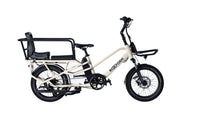
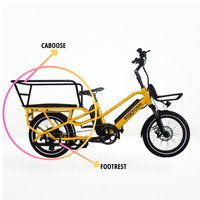
- Quick releases and axles. Check the wheels and seat post are tight, and that nothing is loose on the rack or child seat.
- Battery. Make sure it is properly latched and locked into the frame.
A realistic e-bike servicing schedule
Mileages assume year-round UK commuting on wet, gritted roads. Fair-weather riders can stretch everything; winter and cargo riders should tighten it.
| Interval | What to do | Who |
|---|---|---|
| Every ride | Tyres, brakes, lights, battery latch | You |
| Weekly | Check tyre pressure properly with a gauge; look at brake pad thickness; wipe the chain | You |
| Monthly | Clean and re-lubricate the chain; check bolts on rack, mudguards, kickstand and accessories; inspect tyres for cuts and embedded flint | You |
| Every 3 months | Chain wear gauge; brake pads and rotors; spoke tension and wheel trueness | You or a shop |
| First 100 to 200 miles on a new bike | Bedding-in service: cables and spokes settle, everything needs re-tensioning | Shop |
| Every 6 to 12 months | Full service, covering the checklist further down this page | Shop |
If you ride daily, or carry children and shopping on a longtail, treat six months as the interval rather than twelve.
Brakes and lights: the parts the law cares about
Two items on that list are not optional maintenance. They are legal requirements, and they apply to your e-bike exactly as they apply to any bicycle.
The Department for Transport's guidance on electrically assisted pedal cycles states that brakes must comply with paragraph 4.6.8 of BS EN ISO 4210-2:2014 and must be maintained in efficient working order. The Pedal Cycles (Construction and Use) Regulations 1983 require two independent braking systems on a normal adult bicycle, one acting on each wheel.
Lighting is equally specific. Riding on a public road after dark, you need a white front lamp, a red rear lamp and a red rear reflector, plus amber pedal reflectors on most cycles. A flashing light can be your only lamp provided it flashes between 60 and 240 times a minute and meets the minimum intensity. A helmet light does not satisfy the requirement on its own, because the lamps must be fitted to the bike.
None of that changes because there is a motor involved. The EAPC rules themselves are separate: assistance limited to a 250 watt continuous rated power output, cut-off at 15.5 mph, working pedals, minimum rider age 14, and no licence, tax or insurance required. We covered the detail in our guide to UK e-bike law.
Chain and drivetrain: the cheapest thing you can get wrong
A chain stretches as it wears. Once it passes roughly 0.5 per cent elongation on a chain-wear gauge, it starts chewing the sprockets and chainring instead of sitting in them. Replace the chain at that point and you have bought a chain. Leave it until the gears skip under power and you are usually buying a cassette and a chainring too.
Check it every three months with a gauge that costs less than a takeaway. Clean and re-lubricate monthly, more often in winter, because road salt strips lubricant and accelerates everything. Use a wet lube for most of the British year and wipe the excess off, because oil left on the outside of the chain collects grit and turns into grinding paste.
The battery and charger are not a service item
You do not service a battery. You look after it, and you replace it eventually.
Use the charger that came with the bike, or one the manufacturer specifically recommends. The Office for Product Safety and Standards' statutory guidelines on lithium-ion battery safety for e-bikes point to BS EN 15194:2017+A1:2023 and BS EN 50604-1 as the relevant standards, and make clear that a battery's protection system has to guard against incompatible chargers. Mismatched chargers are a known fire cause, not a theoretical one.
London Fire Brigade's advice is worth following literally: charge on a hard, flat surface where heat can escape, never on or across an escape route, never while you are asleep or out of the house, let the battery cool before charging, unplug when it is done, and never charge a battery that has been dropped or damaged. A battery that is swollen, hot, leaking or making noise is not a repair job. Stop using it and speak to us.
Never open a pack, replace cells, or have a third party do it. There is more on this in our e-bike battery safety guide.
What a full service should actually include
If you are booking a shop service, this is what you should expect the money to cover:
- Brakes: pads and rotors measured, hydraulic bleed or new cables, lever reach set.
- Drivetrain: chain wear measured, cassette and chainring inspected, gears indexed.
- Wheels: spoke tension, trueness, bearing play, tyre condition.
- Fasteners: every bolt to the manufacturer's torque figure, motor mounts included.
- Electrical: connectors checked for corrosion, diagnostics read, firmware updated where applicable.
- Battery: contacts cleaned, mounting and lock checked, health reported.
Ask for the torque check specifically. Loose fasteners are the failure people notice last.
Quick answers
How often does an e-bike need servicing?
A full shop service every six to twelve months, plus a bedding-in service in the first 100 to 200 miles on a new bike. Daily commuters and cargo riders should use the six-month end of that range.
Can I service an e-bike myself?
The bicycle parts, yes: tyres, chain cleaning, brake pad checks, bolt checks. The motor, battery and wiring should be left to a dealer. Opening a battery pack is never a home job.
Does e-bike servicing cost more than a normal bike service?
Labour rates are similar, but e-bikes get through consumables faster, so the parts element is usually higher. Budget for chains and brake pads more often rather than a more expensive service.
Is a worn brake or a dead light actually illegal?
Yes. Brakes must be maintained in efficient working order, and a bike ridden on a public road after dark must carry working front and rear lamps and a rear reflector.
Does jet washing damage an e-bike?
It can. Pressure drives water past bearing seals and into connectors. Use a bucket, a brush and a low-pressure hose, and keep water off the battery contacts.
If you would rather it was someone else's job
We sell and support our bikes in the UK, and every Roxform is built around parts a normal bike shop can service. If you are choosing a bike and want to know what it will cost to keep running, look through the electric bike range or start with the STRIDE S, our everyday city model. For riders storing a bike outdoors, a proper cover does more for longevity than any amount of lubricant: the Oxford Aquatex Pro cover is the one we keep in stock.
Not sure what yours needs? Send us the model and rough mileage and we will tell you honestly.


